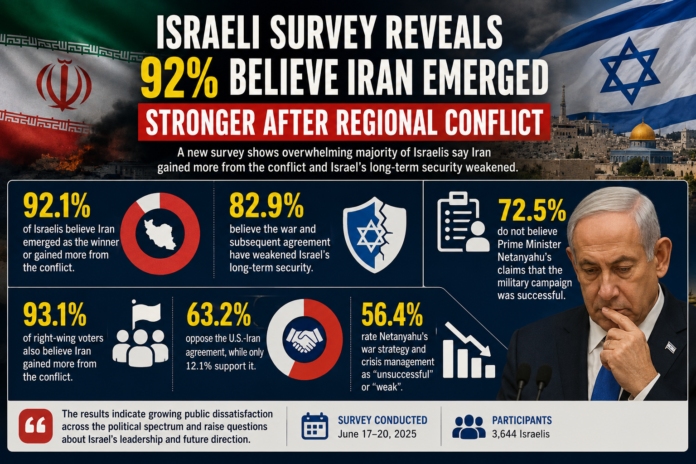
A recent public opinion survey has revealed growing concerns among Israeli citizens regarding the outcome of the latest Middle East conflict and the subsequent diplomatic developments between the United States and Iran. The findings suggest that a large majority of Israelis believe Iran gained more strategic advantages from the confrontation, while Israel’s long-term security position may have weakened.
The survey, conducted jointly by the Hebrew University of Jerusalem and the Agam Institute between June 17 and June 20, gathered responses from 3,644 participants across Israel. The results paint a striking picture of public sentiment and highlight increasing skepticism toward the government’s handling of both military and diplomatic affairs.
According to the survey, 92.1 percent of respondents said they believe Iran emerged as the winner of the conflict or benefited more than Israel from the events that unfolded. This overwhelming majority indicates that many Israelis view the outcome of the confrontation as unfavorable for their country despite official government statements emphasizing military achievements.
The findings also suggest widespread concerns about Israel’s future security. Nearly 82.9 percent of participants stated that the war and the diplomatic agreement that followed have weakened Israel’s long-term security position. Many respondents expressed fears that the regional balance of power may have shifted in a way that benefits Iran and its strategic interests.
One of the most notable aspects of the survey is that these opinions were not limited to opposition supporters. Even among voters who traditionally support Prime Minister Benjamin Netanyahu and right-wing political parties, similar views were recorded. The survey found that 93.1 percent of right-wing respondents also believed that Iran had gained more from the conflict than Israel.
Political analysts say this trend is particularly significant because it demonstrates that concerns about the outcome of the conflict extend across the political spectrum. When supporters and critics of the government share similar concerns, it often signals a deeper level of public dissatisfaction.
The survey also examined public attitudes toward the agreement reached between the United States and Iran following the conflict. Opposition to the deal appeared widespread among Israeli citizens. According to the results, 63.2 percent of respondents opposed the agreement, while only 12.1 percent expressed support for it. The remaining participants were either undecided or did not provide a clear opinion.
Many critics of the agreement argue that it may provide Iran with greater diplomatic and economic flexibility while failing to adequately address Israel’s security concerns. Supporters of the deal, however, believe diplomatic engagement could reduce tensions and lower the risk of future military confrontations in the region.
Another key finding from the survey relates to public trust in political leadership. Approximately 72.5 percent of respondents said they do not believe Prime Minister Netanyahu’s claims that the military campaign was a success. This suggests a significant credibility challenge for the government at a time when national security remains one of the most important issues for voters.
In addition, 56.4 percent of participants described Netanyahu’s wartime strategy and crisis management as either unsuccessful or weak. Such figures indicate that many Israelis remain unconvinced by the government’s explanations regarding the conflict’s outcomes and broader regional implications.
Political observers view these results as an important warning sign for Israel’s leadership. Public confidence is often a crucial factor in maintaining political stability, particularly during periods of regional uncertainty. A sustained decline in trust could have consequences for future elections, coalition politics, and the government’s ability to advance major policy initiatives.
Experts believe that if public dissatisfaction continues to grow, it could significantly influence Israel’s domestic political landscape in the coming years. Future election campaigns may increasingly focus on national security, diplomatic strategy, and leadership accountability.
While governments often present military operations through the lens of strategic objectives and achievements, public perception can differ substantially. The survey highlights the gap that may exist between official narratives and the views held by many citizens.
As regional tensions continue to evolve, the debate over the conflict’s outcome and its long-term consequences is likely to remain a central issue in Israeli politics. Whether these concerns translate into political change will depend on future developments, government responses, and the broader security environment in the Middle East.

