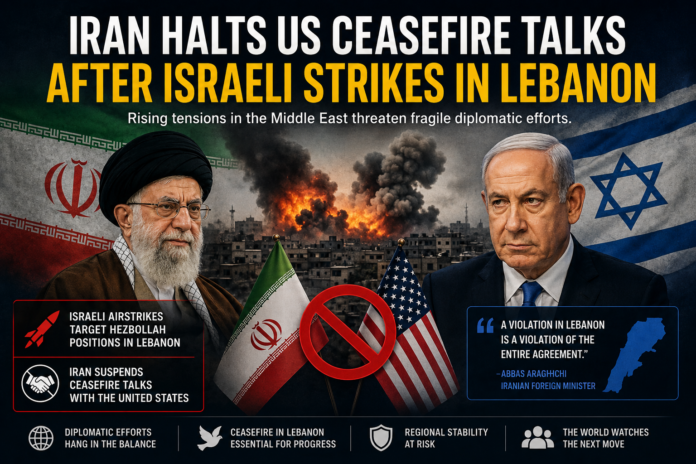
The growing conflict in the Middle East has taken another significant turn as Iran reportedly suspended its ongoing ceasefire discussions with the United States following renewed Israeli airstrikes on Hezbollah positions in Lebanon.
According to reports published by Iran’s semi-official Tasnim News Agency, members of the Iranian negotiating team and sources familiar with the talks claimed that Tehran has paused negotiations and the exchange of draft agreements that were being conducted through international mediators.
The reported decision came after Israel launched a series of attacks targeting Hezbollah locations in southern Lebanon. Iranian officials argue that these strikes represent a violation of broader ceasefire understandings that were expected to reduce tensions across multiple regional fronts.
Iranian media outlets stated that Lebanon had been included among the key conditions discussed during ceasefire negotiations between Iran and the United States. Tehran reportedly believes that any military escalation in Lebanon undermines the credibility of the diplomatic process and weakens efforts to establish regional stability.
According to the reports, Israeli Prime Minister Benjamin Netanyahu ordered the latest military operations against Hezbollah positions despite ongoing diplomatic efforts. Iranian sources described these actions as a direct obstacle to peace initiatives and a challenge to the ceasefire framework under discussion.
The Iranian negotiating team is said to have informed mediators that talks cannot continue unless there is meaningful progress toward ending hostilities in both Gaza and Lebanon. Iranian officials reportedly insist that a complete cessation of military operations and the withdrawal of Israeli forces from Lebanese territory are essential prerequisites for any future diplomatic engagement.
While the Iranian government has not officially confirmed or denied the suspension of negotiations, statements from senior Iranian leaders suggest growing dissatisfaction with the current situation. Officials have repeatedly emphasized that regional security issues are interconnected and cannot be addressed separately.
Iranian Parliament Speaker Mohammad Baqer Qalibaf criticized both Israel’s military actions in Lebanon and what he described as American pressure tactics against Iran. He argued that these developments indicate a failure to respect the spirit of ongoing diplomatic efforts.
Meanwhile, Iranian Foreign Minister Abbas Araqchi stated that any ceasefire arrangement involving Iran and the United States should apply to all active fronts, including Lebanon. He warned that violations in one area could jeopardize the entire agreement.
Foreign Ministry spokesman Ismail Baqaei also expressed concern, saying that continued Israeli attacks and conflicting signals from Washington were complicating diplomatic efforts. He stressed that achieving a lasting ceasefire in Lebanon remains a crucial step toward broader regional peace.
The latest developments highlight the fragile nature of diplomacy in the Middle East. As military operations continue and political tensions rise, the future of ceasefire negotiations between Iran and the United States remains uncertain. Observers warn that without significant progress on the ground, efforts to reduce regional tensions may face further setbacks in the coming weeks.

