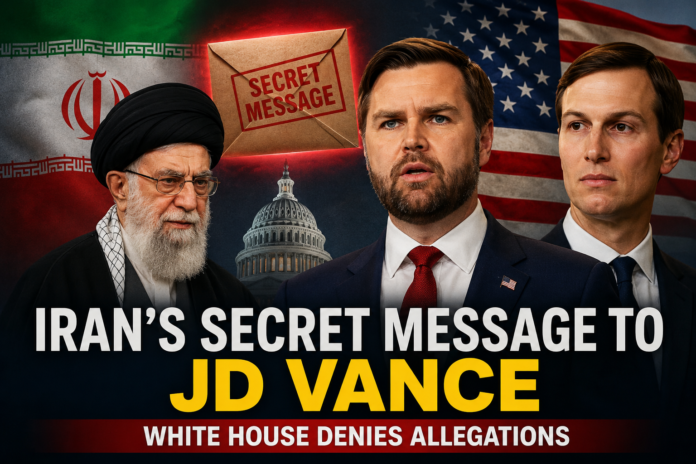
Iran reportedly sent a confidential diplomatic message to U.S. Vice President JD Vance, raising concerns about the role of former President Donald Trump’s son-in-law Jared Kushner and U.S. envoy Steve Witkoff in ongoing negotiations, according to a report published by an American media outlet. However, the White House has firmly rejected the report, calling the allegations false and without evidence.
The report claims that the alleged message was delivered to Vice President Vance through an intermediary during diplomatic discussions held in Switzerland in June. According to the publication, Iranian officials expressed concerns that the involvement of Kushner and Witkoff in future negotiations could make it more difficult to achieve a long-term diplomatic agreement between Washington and Tehran.
The report further alleged that Iranian officials believe confidential information related to the negotiations was being used for personal financial gain. It also claimed that Jared Kushner allegedly shared sensitive details about the talks with Israeli Prime Minister Benjamin Netanyahu. However, the publication did not provide any verified documents or official evidence to support these accusations.
Additionally, the report stated that Iranian officials estimated the alleged financial benefits from the claimed information could have reached approximately $9 billion by June. These figures, however, remain unverified and have not been confirmed by any independent authority.
The White House quickly dismissed the claims. White House spokesperson Anna Kelly said that U.S. officials had never received any such secret diplomatic message from Iran. She described the report as entirely inaccurate and emphasized that its allegations have no basis in fact.
At this time, neither the Iranian government nor other U.S. officials have publicly released evidence supporting the claims outlined in the report. As a result, the allegations remain unsubstantiated and should be treated with caution until verified by credible sources.
Diplomatic relations between the United States and Iran have remained highly sensitive in recent years, with negotiations often taking place through indirect channels involving third-party mediators. Reports concerning back-channel communications frequently attract significant attention, but experts note that such claims require strong supporting evidence before they can be considered reliable.
Political analysts also caution that unverified reports involving senior government officials or high-profile political figures can quickly spread online, making it essential to rely on official statements and trusted news organizations for accurate information. In this case, the White House has categorically denied the existence of the alleged message, while no independent investigation has confirmed the report’s central claims.
As discussions over regional security and diplomatic relations continue, observers will be watching closely for any official developments. Until additional evidence emerges, the reported allegations remain disputed and unverified.
FAQ
1. Did Iran send a secret message to JD Vance?
According to an American media report, Iran allegedly sent a confidential message through an intermediary. However, the White House has denied receiving any such message.
2. What were the allegations against Jared Kushner?
The report claimed that Jared Kushner allegedly benefited from sensitive negotiation-related information and shared details with Israeli officials. No independent evidence has been presented to support these claims.
3. Was Steve Witkoff mentioned in the report?
Yes. The report alleged that Steve Witkoff’s involvement in the negotiations could complicate future diplomatic agreements, according to unnamed Iranian sources.
4. How did the White House respond?
White House spokesperson Anna Kelly rejected the allegations, stating that no secret message was received and describing the claims as completely baseless.
5. Is there any evidence supporting these allegations?
No. As of now, no official documents or independently verified evidence have been released to support the claims made in the report.
6. Why is this report receiving attention?
The allegations involve senior U.S. officials and sensitive diplomatic negotiations between the United States and Iran, making the story significant despite the lack of verified evidence.

