How to Start a Business in the UK as a Sole Trader: Step-by-Step Guide (2026)
Starting a business in the UK is simpler than most people expect. For many freelancers, tradespeople and online sellers, the easiest route is to become a sole trader. There are no company forms to file and the setup is free, but there are a few HMRC rules you must follow so you do not end up with penalties later.
Last updated: November 2026. This is general information, not tax advice.
What is a Sole Trader?
A sole trader is an individual who runs their own business and keeps the profits after tax. You and the business are legally the same person. That means it is quick to set up, but you are personally responsible for any debts the business cannot pay.
Typical sole traders include freelance designers, plumbers, hairdressers, tutors, delivery drivers and people selling products online.
Step 1: Check Whether You Need to Register
You can start trading straight away. You must register with HMRC if your gross trading income goes above £1,000 in a tax year (the tax year runs from 6 April to 5 April). Many people register early anyway because it makes banking, invoicing and later filing easier.
Step 2: Register for Self Assessment
You register as a sole trader by registering for Self Assessment on GOV.UK. You will need:
- an email address and your UK address
- your National Insurance number
- a form of ID for the identity check
Start at the official GOV.UK sole trader page and follow the link to register for Self Assessment. After registering, HMRC gives you a Unique Taxpayer Reference (UTR), which you will need to file your tax return.
Deadline to Remember
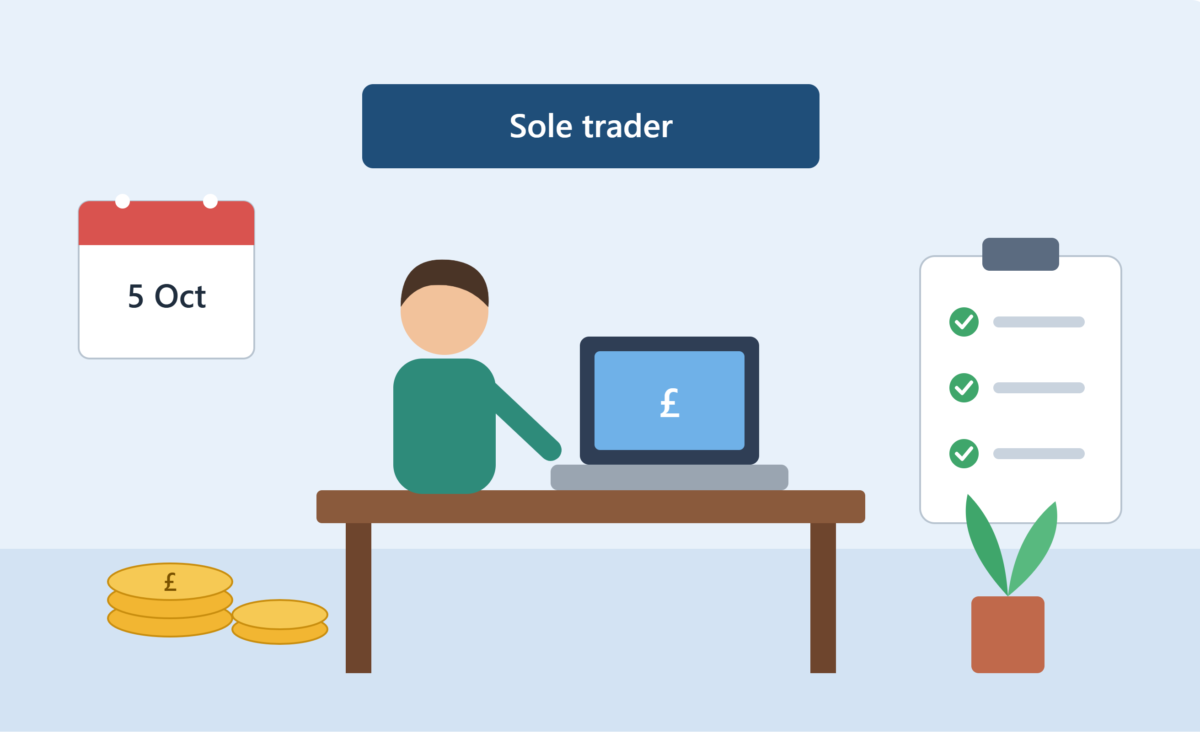
You must register by 5 October after the end of the tax year in which you started trading. Miss it and HMRC will set a different deadline and may charge penalties.
Step 3: Choose a Business Name
As a sole trader you can trade under your own name or choose a business name. You cannot use a name that is offensive, that suggests a connection with government, or that is the same as an existing trademark. Check that the name is free as a domain and on social media before you commit.
Step 4: Open a Separate Bank Account
You are not legally required to open a business account as a sole trader, but it is strongly recommended. Keeping business and personal money apart makes your records cleaner and your tax return far less stressful.
Step 5: Keep Proper Records
HMRC expects you to record:
- all sales and income
- all business expenses
- VAT records, if you are VAT-registered
A simple spreadsheet or an accounting app is enough to start. Save receipts and invoices as you go, not in a rush before the January deadline.
Step 6: Know When VAT Applies
You must register for VAT if your taxable turnover goes above £90,000 in a 12-month period. Below that, registration is optional. Some small businesses register voluntarily so they can reclaim VAT on expenses, but it also means charging VAT to customers, so think about who your customers are first.
Step 7: Understand Your Tax and National Insurance
As a sole trader you pay Income Tax on your profit (your income minus allowable expenses) and Class 4 National Insurance above a profit threshold. Because tax is not deducted automatically, set aside a portion of every payment you receive in a separate savings pot. Our guide to cybersecurity tips every business should follow is also worth reading once you start storing customer details.
Sole Trader or Limited Company?
| Sole trader | Limited company | |
|---|---|---|
| Setup | Very simple, free | Registered with Companies House |
| Personal liability | Unlimited | Usually limited to the company |
| Paperwork | Lighter | More filings and rules |
| Best for | Starting out, low risk | Higher profits, bigger risk |
Many people start as sole traders and switch to a limited company later once profits grow. An accountant can help you decide when that makes sense.
Mistakes to Avoid
- Registering after the 5 October deadline
- Mixing personal and business spending
- Not saving money for the tax bill
- Forgetting to track expenses you could claim
- Ignoring the VAT threshold until you are over it
Next Steps
Once you are registered, write down your plan. Our article on how to create a business plan that attracts investors shows how to turn your idea into a clear, realistic plan.
FAQs
Is it free to register as a sole trader?
Yes, registering with HMRC for Self Assessment is free.
Do I need an accountant?
Not legally, but many sole traders use one to save time and avoid mistakes, especially in the first year.
Can I be a sole trader and have a job?
Yes. Many people run a side business alongside employment, but you still need to register once your trading income goes above £1,000 in a tax year.
[…] One and How to Choose · How to Use AI Tools at Work Without Leaking Company Data · How to Start a Business in the UK as a Sole Trader: Step-by-Step Guide (2026)Wednesday, 11 November […]