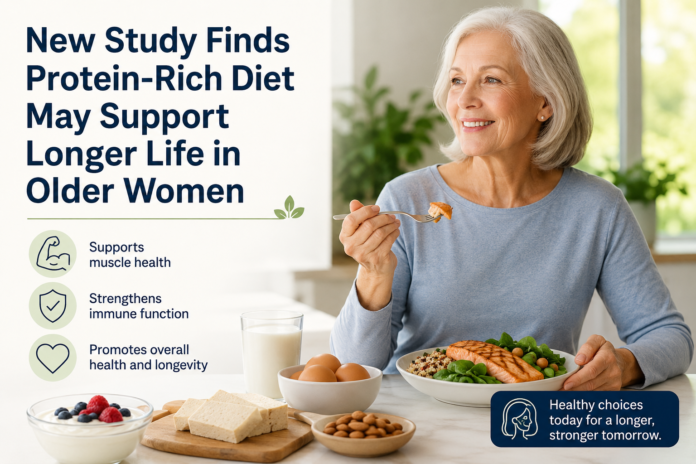
A new medical study conducted in China has revealed surprising findings about the relationship between diet, meat consumption, and longevity, particularly among older women. Researchers discovered that women over the age of 80 who consumed meat were more likely to live to 100 compared to women who followed a strict vegetarian diet.
The research was jointly carried out by experts from three leading Chinese institutions, including Fudan University, Chinese Center for Disease Control and Prevention, and Shanghai Jiao Tong University. The findings have sparked discussion among nutrition experts because they challenge some common assumptions about vegetarian diets and healthy ageing.
According to the study, the positive effect of meat consumption was most noticeable in underweight elderly women. Researchers found that women who were underweight and regularly consumed meat were 44 percent more likely to reach the age of 100 than underweight vegetarian women. However, among women with normal or higher body weight, there was no major difference in life expectancy between meat eaters and non-meat eaters.
Interestingly, the study did not find a similar connection in men. Researchers said the reason for this difference is still unclear and may require further scientific investigation.
Experts involved in the study explained that the benefits linked to meat consumption may actually come from higher protein intake rather than meat itself. They noted that vegetarian women who included protein-rich foods such as fish, eggs, and milk in their diets showed life expectancy levels close to those of meat-eating women.
This suggests that the key factor for healthy ageing may not be whether someone follows a vegetarian or non-vegetarian diet, but whether they receive enough protein and calories to support the body during old age.
Researchers highlighted that ageing often leads to muscle weakness, weight loss, and reduced physical strength. As a result, older adults may require more protein than younger people to maintain muscle mass, energy levels, and overall health.
The study also pointed out that while fruits and vegetables remain extremely beneficial throughout life, elderly individuals should pay special attention to balanced nutrition. Experts warned that being excessively underweight in old age can increase health risks and reduce physical resilience.
According to health specialists, maintaining a balanced diet that includes vegetables, healthy fats, whole grains, and appropriate amounts of animal-based or plant-based protein can help support long-term health and independence in later years.
The researchers emphasised that there is no single “magic food” responsible for a long life. Instead, they believe longevity is strongly connected to balanced eating habits, sufficient nutrition, physical activity, and maintaining a healthy body weight.
The findings add to growing scientific evidence showing that nutritional needs change with age and that elderly individuals may benefit from diets designed specifically to support strength, mobility, and overall well-being.
Although more research is needed to fully understand the relationship between meat consumption and longevity, the study offers valuable insight into how proper nutrition may help older adults live healthier and longer lives.

