Best HMRC-Approved Accounting Software for UK Sole Traders (2026–2027 Guide)
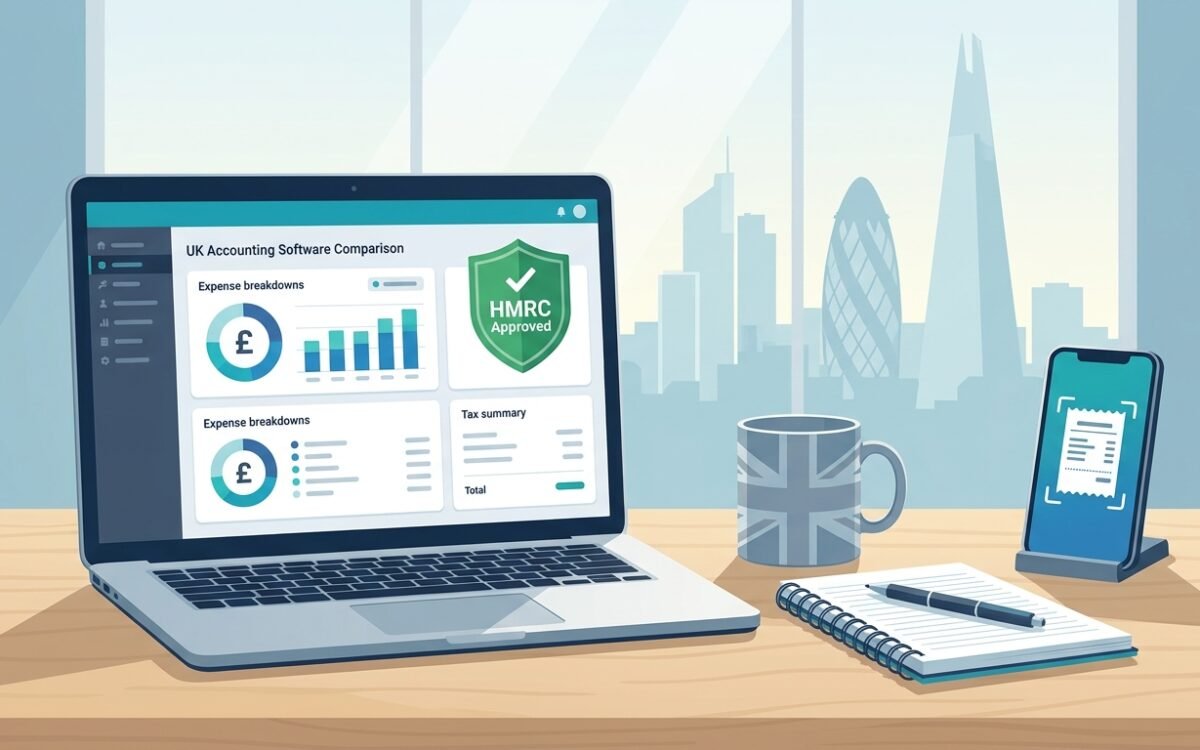
FreeAgent, Xero, QuickBooks, and Sage are the top HMRC-recognised accounting software options for UK sole traders complying with Making Tax Digital (MTD) for Income Tax. According to the GOV.UK Making Tax Digital compatible software guidance, sole traders and landlords with qualifying gross income above £50,000 must already use approved software for quarterly digital reporting, while those earning over £30,000 join from 6 April 2027.
Choosing the wrong bookkeeping package can saddle a small business with unnecessary monthly fees—or leave you scrambling before a quarterly HMRC deadline. (Not sure whether you hit the £50,000 or £30,000 threshold yet? Check our complete Making Tax Digital for Income Tax (2026–2027) Guide first.)
Top HMRC-Recognised MTD Software Compared (2026)
Every platform listed below is officially recognised by HMRC to keep digital records, submit quarterly income and expense updates, and file your final year-end declaration:
| Software | Best For | Typical UK Price | Free Option Available? |
| FreeAgent | Sole traders & freelancers wanting zero software fees | ~£19/month (standard) | Yes — Free with a NatWest, Mettle, RBS, or Ulster Bank business account |
| Xero | Growing sole traders & multi-income freelancers | £7 – £35/month | 30-day free trial |
| QuickBooks | Mobile-first receipt scanning & mileage tracking | £10 – £20/month | 30-day free trial |
| Sage Accounting | Sole traders planning to scale or hire staff | £14 – £30/month | Free trial available |
| My Tax Digital | Spreadsheet users needing simple bridging | Free tier available | Yes — Free basic bridging & accounting mode |
1 FreeAgent — Best Overall for UK Sole Traders (Free Option)
Built specifically around UK tax rules, FreeAgent simplifies Self Assessment estimates, invoicing, and quarterly MTD submissions in a clean dashboard.
- Why It Stands Out: Under the official FreeAgent free accounting software scheme, you pay £0/month if you hold a qualifying business current account with NatWest, Mettle, Royal Bank of Scotland, or Ulster Bank (requiring at least one monthly transaction on Mettle).
- Key Features: Automatic daily bank feeds, real-time Income Tax and National Insurance timeline estimates, and direct HMRC MTD filing.
- Best For: Sole traders and freelancers who want full bookkeeping software without adding another monthly subscription. (Just registering as self-employed? Follow our How to Start a Business in the UK as a Sole Trader checklist before opening your business bank account.)
2 Xero — Best for Scalability & App Integrations
If you juggle multiple income streams—such as freelance consulting alongside UK rental property—Xero offers the deepest ecosystem of third-party business integrations.
- Why It Stands Out: Xero’s entry-level Simple plan supports basic MTD for Income Tax compliance at a budget price, while higher tiers unlock multi-currency invoicing, project tracking, and inventory tools.
- Key Features: Automated bank reconciliation, Hubdoc receipt capture, and instant accountant access.
- Watch Out For: Phone support is limited; most customer help happens via online support tickets.
3 QuickBooks — Best for On-the-Go Receipt & Mileage Tracking
For tradespeople, delivery drivers, and mobile freelancers, QuickBooks excels at capturing expenses directly from your smartphone.
- Why It Stands Out: Snap a photo of a fuel or materials receipt, and QuickBooks automatically extracts the date, supplier, and VAT/expense category.
- Key Features: Built-in GPS mileage tracker, automated invoice reminders, and live Income Tax estimator for quarterly updates.
- Data Privacy Tip: Many modern accounting tools use built-in AI to auto-categorize bank transactions and receipts—make sure your business follows our AI Policy for UK Small Businesses when using external AI assistants alongside financial records.
4 Sage Accounting — Best for Growing Businesses & CIS
Sage is a longstanding UK accounting staple, especially popular among construction subcontractors under the Construction Industry Scheme (CIS) and product-based sole traders.
- Why It Stands Out: Strong cash-flow forecasting, CIS deduction tracking, and smooth upgrades if you later transition from sole trader to a limited company.
- Key Features: Direct HMRC MTD submissions, automated invoice chasing, and UK-based support.
5 Bridging Software — Best If You Love Excel Spreadsheets
You do not have to abandon spreadsheets to comply with Making Tax Digital. HMRC permits spreadsheet bookkeeping as long as you connect your file through recognised bridging software (such as My Tax Digital or VitalTax) that submits quarterly totals digitally without manual re-typing.
How to Verify Any Software Before You Buy
Before paying for an annual subscription, always run a quick two-minute check on the official GOV.UK find software compatible with Making Tax Digital tool:
- Filter by Self-employment, UK property, or Both depending on your income sources.
- Confirm the tool supports both quarterly updates and the final year-end declaration (some cheap bridging tools only handle quarterly updates).
- Check whether it connects automatically to your specific UK business bank account.
Frequently Asked Questions
Does HMRC offer free Making Tax Digital software?
No. HMRC does not provide its own free bookkeeping app, though several HMRC-recognised third-party providers offer free tiers or free bank-linked plans (such as FreeAgent with a Mettle or NatWest business account).
Can I switch accounting software partway through the tax year?
Yes, you can switch MTD-compatible software mid-year, provided you export your digital records from the old platform and ensure your quarterly totals do not double-count earlier submissions.
Is spreadsheet bookkeeping still legal under MTD in 2026?
Yes, as long as your digital links remain intact and you use HMRC-recognised bridging software to transmit your quarterly figures to HMRC.