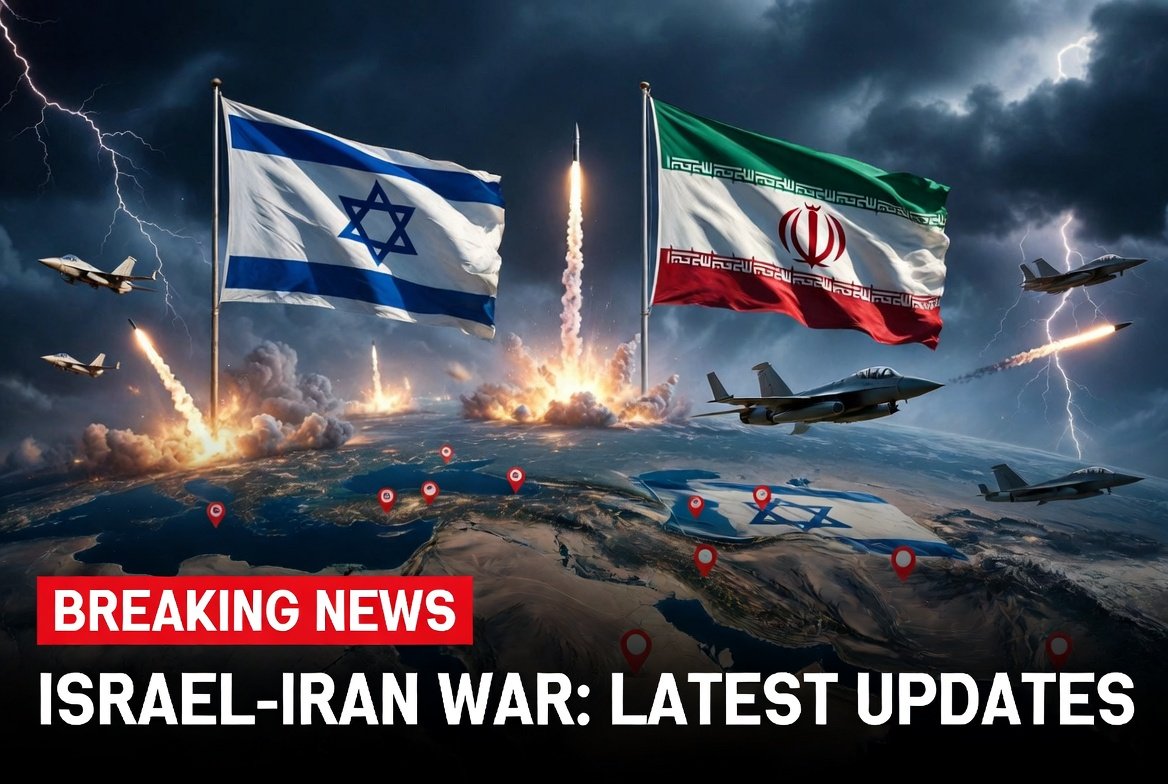
The Israel-Iran conflict escalated dramatically into direct warfare in early 2026, drawing in the United States and reshaping the Middle East. What began as targeted strikes has become a broader regional confrontation involving missile barrages, proxy forces, and economic disruption through the Strait of Hormuz. A fragile ceasefire holds tenuously between the US, Israel, and Iran, but tensions remain high with brinkmanship over maritime access and sporadic violence in Lebanon.
Outbreak of Direct War: February 28, 2026
On February 28, 2026, the United States and Israel launched a major coordinated air campaign, dubbed Operation Epic Fury by the US, against Iran. Nearly 900 strikes occurred in the initial 12-hour wave, targeting Iranian missile sites, air defenses, military infrastructure, nuclear-related facilities, and leadership targets.
Key impacts included the assassination of Iran’s Supreme Leader Ali Khamenei and other senior officials. Strikes also hit government buildings, military bases, and adjacent civilian sites. One notable incident involved a girls’ school near a naval base in Minab, killing around 170 people. Iran reported significant civilian casualties from these operations.
Iran’s immediate response involved hundreds of missiles and thousands of drones launched at Israel, US bases in the region, and allies in Gulf Arab states. Iran also closed the Strait of Hormuz to maritime traffic, a critical chokepoint for global oil flows, causing immediate disruptions to energy markets.
Military Actions and Escalation (March–Early April 2026)
- Israeli and US strikes continued for weeks, hitting energy infrastructure (e.g., South Pars gas field, petrochemical complexes in Asaluyeh), steel facilities, and IRGC targets. Decapitation strikes killed numerous IRGC commanders and officials.
- Iranian retaliation included ballistic missile and drone attacks on Israel (over 650 missiles reported in the first 40 days, many with cluster munitions), causing civilian deaths and injuries. Attacks also targeted US bases and Gulf states.
- Proxy involvement: Hezbollah in Lebanon intensified attacks on Israel, prompting Israeli ground operations and massive airstrikes in southern Lebanon and Beirut. Houthis and Iraqi militias also engaged.
Casualties (approximate, per reports up to early May):
- Iran: ~3,375 killed (including civilians and children), over 26,500 injured.
- Israel: Dozens killed, thousands injured.
- Lebanon: Over 2,500 killed amid renewed Israel-Hezbollah fighting.
- US: Limited combat deaths reported.
The conflict caused widespread displacement, particularly in Lebanon (over a million people), and economic shocks, with US gas prices rising sharply.
Ceasefire and Fragile Peace (April 2026 Onward)
A conditional ceasefire between the US/Iran (including Israel) took effect around April 7–8, 2026, brokered with involvement from Pakistan and China. It followed weeks of intense fighting and aimed to allow diplomacy on nuclear issues, the Strait of Hormuz, and regional de-escalation.
However, implementation has been uneven:
- Israel continued operations against Hezbollah in Lebanon, issuing new evacuation orders and conducting strikes despite the truce.
- Tensions over the Strait of Hormuz persist. Iran has restricted shipping and threatened action against US efforts to guide vessels. Incidents include Iranian claims of missile strikes on US naval assets (denied by the US).
Latest Developments (Late April–Early May 2026)
As of early May 2026, the situation remains volatile:
- Diplomatic efforts: Iran submitted a new 14-point proposal, but US President Donald Trump expressed dissatisfaction, warning of possible renewed strikes if Iran “misbehaves.” Talks continue amid mutual accusations.
- Military posture: US forces remain deployed in the region; CENTCOM leaders have visited troops. Israel maintains operations in Lebanon and prepares for contingencies. Senior Iranian officers have warned of likely renewed conflict.
- Strait of Hormuz: A flashpoint for potential resumption of hostilities, with US moves to secure shipping lanes met by Iranian resistance. Global energy prices remain elevated.
- Humanitarian and economic toll: Significant civilian suffering in Iran and Lebanon; redundancies and infrastructure damage in Iran.
Broader Implications
The 2026 war marks a historic shift from shadow/proxy conflict to direct confrontation between Iran and the Israel-US alliance. It has weakened Iranian leadership and military capabilities but also demonstrated Iran’s ability to disrupt global energy flows and rally proxies. Long-term outcomes depend on whether diplomacy can address nuclear concerns, Hezbollah’s disarmament, and Hormuz access—or if miscalculations lead to renewed fighting.
The situation evolves rapidly. Developments in negotiations, the Strait of Hormuz, and Lebanon will determine whether the ceasefire holds or the region descends into further escalation. International mediation remains critical to preventing a wider war.
This article is based on publicly reported information from multiple sources as of May 5, 2026. Facts on the ground can change quickly.

