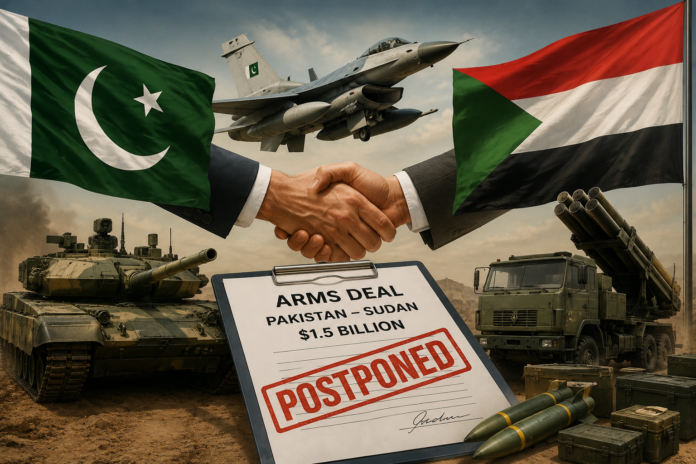
Pakistan has reportedly postponed a proposed $1.5 billion defense agreement with Sudan, a deal that included the potential sale of fighter jets, military equipment, and other defense-related assets. The reported delay comes amid growing regional diplomatic considerations, particularly concerns linked to Saudi Arabia’s strategic interests in the Red Sea and the broader Middle East.
The development highlights the delicate balance Pakistan maintains between expanding its defense exports and preserving strong relationships with key allies in the Gulf region.
Background of the Proposed Deal
Reports suggest that Pakistan and Sudan had been discussing a major defense cooperation package valued at approximately $1.5 billion. The agreement was expected to include advanced military hardware, training support, and potentially fighter aircraft manufactured or upgraded by Pakistan’s defense industry.
The deal represented an opportunity for Pakistan to strengthen its position in the global defense export market while enhancing military ties with an African nation seeking to modernize its armed forces.
Why the Deal Was Postponed
Although no official government statement has confirmed all the details, reports indicate that Pakistan chose to delay the agreement after considering broader regional diplomatic dynamics.
Saudi Arabia has played a significant role in mediation efforts related to Sudan’s ongoing conflict and remains one of Pakistan’s closest economic and strategic partners. Moving forward with a large-scale weapons agreement during a period of instability could have complicated diplomatic initiatives or affected regional relationships.
As a result, Islamabad reportedly decided that postponing the transaction was the more prudent course of action.
Saudi Arabia’s Strategic Interests
Saudi Arabia has invested considerable diplomatic effort in promoting peace negotiations between Sudan’s rival factions. Stability in Sudan is particularly important because of its location along the Red Sea, a region vital to international shipping, trade routes, and Gulf security.
Any major arms transfer during an active conflict could be viewed as potentially influencing the military balance, making regional partners cautious about such agreements.
Pakistan’s Defense Export Strategy
Pakistan has steadily expanded its defense manufacturing capabilities over the past decade. The country exports a range of military products, including:
- Fighter aircraft
- Trainer aircraft
- Armored vehicles
- Naval equipment
- Small arms
- Ammunition
- Military electronics
Growing exports have become an important part of Pakistan’s broader economic and defense strategy.
Sudan’s Military Needs
Sudan has faced prolonged political instability and armed conflict, increasing demand for modern military equipment. However, international scrutiny surrounding arms transfers to conflict zones has made defense agreements more sensitive.
Countries considering defense cooperation with Sudan must weigh commercial opportunities against diplomatic, humanitarian, and legal considerations.
Diplomatic Balance for Pakistan
Pakistan has traditionally maintained close relationships with both Middle Eastern and African nations. At the same time, its longstanding partnership with Saudi Arabia includes cooperation in defense, economic development, energy, and regional security.
Postponing the reported agreement may reflect Islamabad’s preference for prioritizing long-term strategic partnerships while monitoring developments in Sudan.
Regional Implications
The delay could influence future defense cooperation across the region. If Sudan’s security situation improves and diplomatic negotiations make progress, discussions regarding military cooperation could resume under different circumstances.
For now, the reported postponement demonstrates how geopolitical considerations increasingly shape international defense agreements, particularly in regions experiencing conflict.
Looking Ahead
Neither Pakistan nor Sudan has officially announced the cancellation of the proposed agreement. Instead, reports suggest the deal has been delayed rather than abandoned.
Future negotiations will likely depend on several factors, including:
- Political stability in Sudan
- Progress in peace negotiations
- Regional diplomatic developments
- International security considerations
- Bilateral discussions between the two countries
Conclusion
The reported postponement of Pakistan’s $1.5 billion arms and fighter jet deal with Sudan underscores the complex relationship between defense exports and international diplomacy. While the agreement offered significant commercial and strategic opportunities, broader regional concerns—particularly Saudi Arabia’s role in promoting stability in Sudan—appear to have influenced Pakistan’s decision to delay the transaction.
As diplomatic efforts continue, the future of the proposed defense partnership will likely depend on changing political conditions and regional security priorities.

