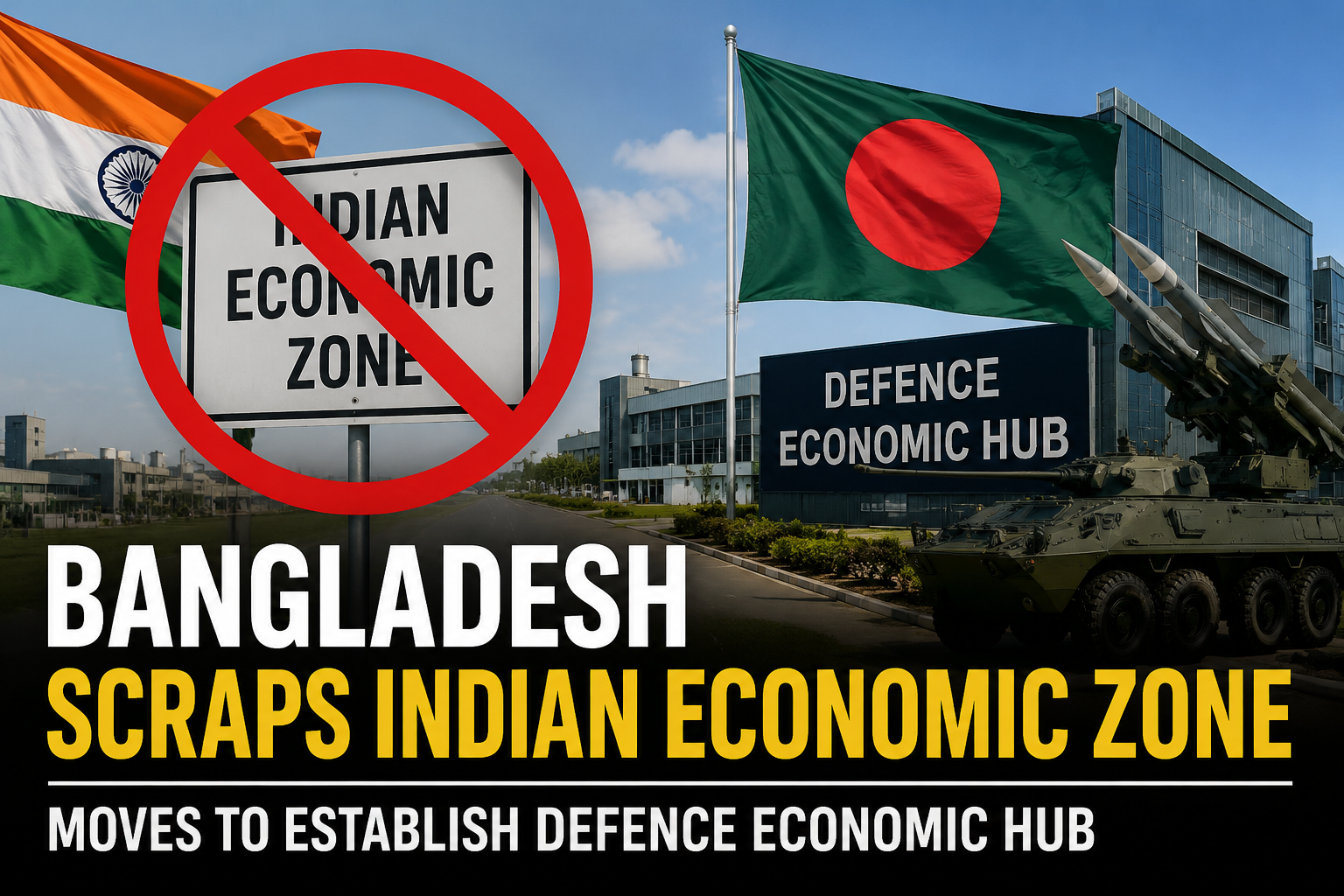
Dhaka Cancels Indian-Backed Project Amid Strategic Shift
The government of Bangladesh has reportedly decided to scrap plans for a proposed Indian economic zone, signaling a major shift in its regional and economic priorities. Instead, authorities are now focusing on developing a new defence-oriented economic hub aimed at strengthening local manufacturing, security cooperation, and strategic independence.
The move marks a significant change in relations between Bangladesh and India, particularly in the area of trade and infrastructure collaboration.
Indian Economic Zone Plan Put on Hold
The proposed Indian economic zone was originally designed to boost bilateral trade, attract foreign investment, and expand industrial activity near key transport corridors. Officials believed the project could create thousands of jobs while improving regional connectivity between the neighbouring countries.
However, sources familiar with the matter said the Bangladeshi government reconsidered the project following strategic reviews and changing economic priorities. Concerns over national interests, regional competition, and long-term control of industrial assets reportedly contributed to the decision.
The cancellation has sparked discussions among analysts about the future of economic cooperation between Dhaka and New Delhi.
Focus Shifts Toward Defence and Strategic Industries
Instead of continuing with the Indian-backed initiative, Bangladesh is now planning a specialised defence economic hub that will focus on military equipment production, technology partnerships, logistics, and industrial innovation.
The new hub is expected to support local defence manufacturing while reducing dependence on foreign suppliers. Officials believe the project could also create opportunities in aerospace technology, cybersecurity, engineering, and advanced industrial research.
Experts say the defence-focused zone could help Bangladesh modernise its armed forces while strengthening domestic industrial capacity.
Regional Implications
The decision comes at a time when geopolitical competition in South Asia continues to intensify. Regional powers are increasingly investing in strategic infrastructure, defence partnerships, and supply chain networks.
Analysts suggest Bangladesh may be seeking a more balanced foreign policy approach by diversifying its economic and security partnerships. The move could also influence future trade negotiations and investment flows across the region.
Meanwhile, Indian officials have not yet issued a detailed public response regarding the reported cancellation of the economic zone project.
Economic Experts React
Economists say the shift toward a defence-oriented industrial strategy may provide long-term benefits if implemented effectively. However, they also warn that defence-focused projects require significant investment, skilled labour, and strong international partnerships to succeed.
Business groups in Bangladesh are closely monitoring developments, particularly regarding foreign investment opportunities and industrial policy changes connected to the new hub.
Some experts believe the project could eventually position Bangladesh as an emerging player in regional defence manufacturing and strategic technology development.
Future Outlook
The Bangladeshi government is expected to release further details about the proposed defence economic hub in the coming months, including investment frameworks, industrial incentives, and potential international collaborators.
The decision highlights how economic policy in South Asia is increasingly linked with national security, regional influence, and strategic independence.
As Bangladesh moves forward with its new vision, regional observers will closely watch how the development reshapes relations with India and impacts the broader economic landscape in South Asia.

