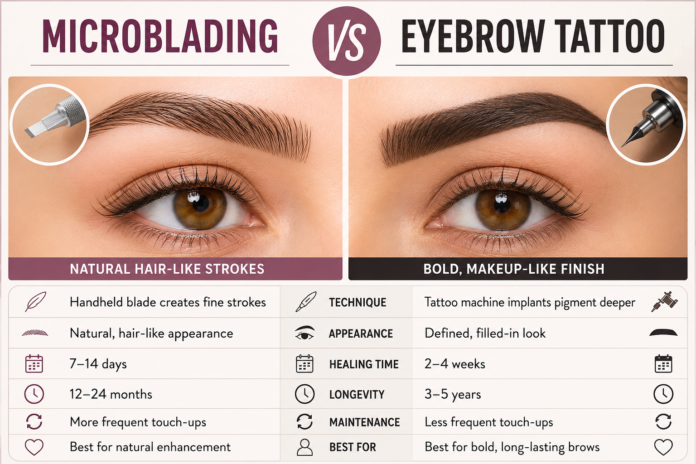
Microblading vs Eyebrow Tattoo
Beautiful eyebrows play a major role in defining facial features and enhancing overall appearance. Well-shaped brows can make the eyes look larger, create facial balance, and reduce the need for daily makeup application.
As cosmetic beauty treatments continue to evolve, more people are turning to semi-permanent and permanent brow enhancement procedures. Two of the most popular options are microblading and eyebrow tattooing.
Although both treatments aim to create fuller and more attractive brows, they differ significantly in technique, longevity, maintenance, and overall appearance.
Understanding the differences between microblading and eyebrow tattoo procedures can help you make a confident decision based on your beauty goals and lifestyle.
What Is Microblading?
Microblading is a semi-permanent cosmetic treatment designed to create natural-looking eyebrow hair strokes.
The procedure uses a handheld tool equipped with fine needles that deposit pigment into the upper layers of the skin. Each stroke is carefully placed to imitate natural eyebrow hairs, resulting in realistic and fuller-looking brows.
Before the treatment begins, the artist maps the brows according to facial proportions and desired shape. This ensures a customized result that complements the individual’s facial structure.
Microblading is particularly popular among people with thin, patchy, or over-plucked eyebrows who want a natural enhancement without the commitment of permanent tattooing.
Benefits of Microblading
- Creates realistic hair-like strokes
- Provides a soft and natural appearance
- Enhances brow symmetry
- Reduces daily makeup application
- Customizable shape and density
- Suitable for sparse eyebrows
What Is an Eyebrow Tattoo?
Eyebrow tattooing is a cosmetic procedure that uses a digital tattoo machine to implant pigment deeper into the skin.
Unlike traditional body tattoos, modern eyebrow tattoo pigments are specially formulated for cosmetic use and gradually fade over time.
The procedure focuses on defining the brows, filling gaps, improving symmetry, and creating a polished appearance that resembles professionally applied makeup.
Because pigment is placed deeper into the skin, eyebrow tattoos generally last much longer than microblading.
Benefits of Eyebrow Tattooing
- Long-lasting results
- Strong brow definition
- Minimal maintenance
- Suitable for active lifestyles
- Water-resistant and smudge-proof
- Ideal for those wanting a makeup-ready look
Microblading vs Eyebrow Tattoo: Key Differences
The following comparison highlights the major distinctions between both procedures.
| Feature | Microblading | Eyebrow Tattoo |
| Procedure Type | Semi-permanent | Long-lasting cosmetic tattoo |
| Pigment Placement | Upper skin layers | Deeper skin layers |
| Application Tool | Handheld blade | Digital tattoo machine |
| Appearance | Natural hair-like strokes | Defined makeup-style finish |
| Healing Period | 7–14 days | 2–4 weeks |
| Longevity | 12–24 months | 3–5 years |
| Touch-Ups | More frequent | Less frequent |
| Best For | Natural brow enhancement | Bold, long-term brow definition |
Which Procedure Looks More Natural?
When it comes to achieving the most realistic appearance, microblading is often considered the winner.
The fine strokes created during the procedure closely resemble natural eyebrow hairs, making it difficult to distinguish between real hair and pigment.
Eyebrow tattoos, while attractive, generally create a more filled-in appearance similar to brow powder or makeup.
For individuals seeking subtle enhancement, microblading is usually the preferred option.
What Is the Latest Eyebrow Enhancement Technique?
Nano brows have quickly become one of the most advanced eyebrow procedures available today.
This modern treatment uses a digital machine with an ultra-fine needle to create precise hair strokes while minimizing skin trauma.
Many beauty professionals consider nano brows an evolution of microblading because they provide highly realistic results with improved pigment retention.
Advantages of Nano Brows
Longer Lasting Results
Nano brows can remain visible for up to three years with proper care.
Suitable for Most Skin Types
The treatment performs well on oily, dry, combination, and mature skin.
Faster Recovery
Because the skin experiences less trauma, healing is often smoother.
Better Precision
The ultra-fine needle creates detailed strokes that closely resemble natural hair growth.
Improved Color Retention
Pigment remains more consistent over time with reduced fading.
Pros and Cons of Permanent Brow Procedures
Every cosmetic treatment comes with advantages and disadvantages.
| Consideration | Advantages | Drawbacks |
| Daily Routine | Eliminates the need for daily brow makeup. | Requires healing time after treatment. |
| Appearance | Creates consistently defined brows. | Results depend heavily on artist expertise. |
| Longevity | Lasts months or years. | Touch-ups may still be necessary. |
| Confidence | Improves facial balance and symmetry. | Unsatisfactory results can be difficult to correct. |
| Cost | Saves money on brow products over time. | Initial treatment can be expensive. |
Factors to Consider Before Choosing
Selecting the right brow procedure requires careful consideration.
Skin Type
Individuals with oily skin may experience faster fading of microblading strokes. Machine-based techniques often perform better for this skin type.
Desired Appearance
Choose microblading if you want natural-looking brows. Choose eyebrow tattooing if you prefer a stronger and more defined appearance.
Artist Experience
A highly skilled artist can significantly improve the final result regardless of the procedure selected.
Budget
While both treatments require an upfront investment, long-term maintenance costs may vary.
Maintenance Commitment
Microblading generally requires more frequent touch-ups than eyebrow tattooing.
Aftercare Tips for Better Results
Proper aftercare is essential for successful healing and long-lasting pigment retention.
- Avoid excessive sweating for several days.
- Keep the treated area clean and dry.
- Do not pick scabs during healing.
- Avoid direct sunlight during recovery.
- Follow all instructions provided by your technician.
- Attend scheduled touch-up appointments if recommended.
Which Brow Treatment Should You Choose?
The right option depends on your personal preferences and beauty goals.
If you want soft, realistic brows that mimic natural hair growth, microblading is often the better choice.
If you prefer stronger definition and longer-lasting results with minimal maintenance, eyebrow tattooing may be more suitable.
Many clients are now exploring nano brows as a modern alternative that combines natural appearance with excellent longevity.
Final Thoughts
The debate between microblading and eyebrow tattooing continues because both procedures offer unique advantages.
Microblading remains popular for its natural appearance and detailed hair-stroke effect, while eyebrow tattooing attracts those seeking durable, low-maintenance results.
With advancements such as nano brows and powder brows, achieving beautiful and symmetrical eyebrows has never been easier.
Consulting an experienced brow specialist is the best way to determine which treatment will complement your skin type, lifestyle, and desired look.
Frequently Asked Questions
Is microblading better than eyebrow tattooing?
Neither is universally better. Microblading offers a more natural appearance, while eyebrow tattooing provides longer-lasting results.
How long does microblading last?
Most microblading treatments last between one and two years before requiring a touch-up.
Are eyebrow tattoos permanent?
Modern cosmetic eyebrow tattoos are long-lasting but gradually fade over time.
What are nano brows?
Nano brows use an ultra-fine machine needle to create realistic hair strokes with improved precision and pigment retention.
Which procedure is best for oily skin?
Nano brows and machine-based eyebrow tattoo techniques are generally more suitable for oily skin than traditional microblading.

