Introduction
In the history of American family entertainment, few attractions are as memorable or unusual as the animatronic shows found at ShowBiz Pizza Place. During the 1980s, these pizza restaurants were more than just places to eat—they were immersive entertainment centres where robotic characters performed music, comedy, and theatrical skits for children and families.
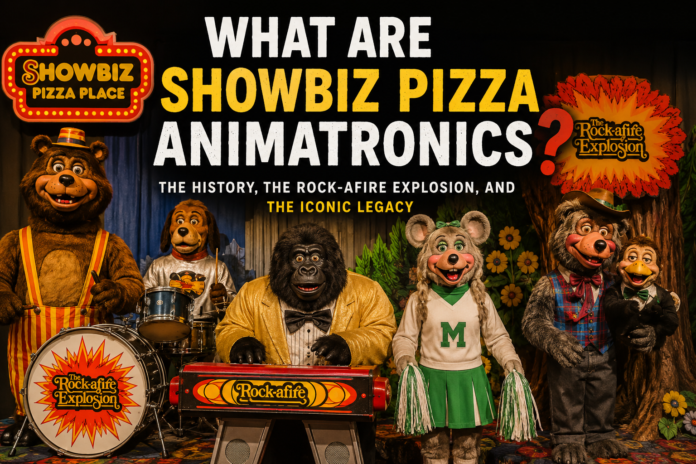
At the heart of this experience were the famous ShowBiz Pizza animatronics, particularly the legendary band known as the Rock-afire Explosion. These animatronic performances combined engineering, storytelling, and music in a way that defined a generation of entertainment and later became a cult phenomenon.
This article explores what ShowBiz Pizza animatronics were, how they worked, why they became so popular, and why they still hold nostalgic value today.
The Origins of ShowBiz Pizza Animatronics
The story begins in the late 1970s and early 1980s, when themed family restaurants were becoming increasingly popular in the United States. The concept was simple: combine dining with entertainment to attract families with children.
ShowBiz Pizza Place opened its doors in 1980 as a competitor to other entertainment-focused pizza chains. However, what set it apart was its ambitious use of advanced animatronics.
Instead of simple arcade games or mascots walking around, ShowBiz Pizza introduced full-stage robotic performances featuring lifelike movements, synchronized music, and elaborate lighting.
The original animatronic show was created by the company Creative Engineering, led by inventor Aaron Fechter. This show became known as the Rock-afire Explosion.
The Rock-afire Explosion: The Heart of ShowBiz Pizza
The Rock-afire Explosion was not just a set of robots—it was a full fictional musical band with personalities, storylines, and voices.
Main Characters
Some of the most iconic members included:
- Billy Bob Brockali – The friendly bear and main host of the show
- Fatz Geronimo – The keyboard-playing gorilla
- Mitzi Mozzarella – The energetic mouse performer
- Rolfe DeWolfe – The comedic wolf character with his puppet, Earl Schemer
- Beach Bear – The laid-back guitarist
Each character had its own personality, voice actor, and role in the band’s performances.
How the Animatronics Worked
ShowBiz Pizza animatronics were technological marvels for their time. They used a combination of:
1. Pneumatic Systems
Air pressure systems powered the movements of the characters, allowing heads to turn, mouths to move, and arms to gesture.
2. Pre-Programmed Controllers
Shows were controlled using early computer systems or tape-based programming that synchronized music with movement.
3. Audio Synchronization
Each character’s mouth movements were carefully timed to match pre-recorded voice tracks and songs.
4. Stage Automation
Lighting effects, curtains, and background props were also automated to enhance the theatrical experience.
The result was a fully synchronized musical performance that felt alive to children and families.
Why Animatronics Were So Popular
The success of ShowBiz Pizza animatronics can be attributed to several factors:
1. Unique Entertainment Experience
At the time, there were no smartphones, streaming services, or digital gaming consoles like today. Watching robots perform live music was astonishing.
2. Family-Friendly Atmosphere
Parents could relax while children were entertained by characters designed specifically for humour and fun.
3. Repeat Visits
Because shows rotated and characters interacted differently, families often returned multiple times.
4. The “Wow Factor”
Seeing machines move and “perform” like humans created a sense of magic and curiosity.
The Competition with Chuck E. Cheese
The rise of ShowBiz Pizza animatronics is closely tied to competition with Chuck E. Cheese.
Interestingly, Chuck E. Cheese originally used a different animatronic system created by Creative Engineering—the same company behind Rock-afire Explosion. However, due to business disputes and branding changes, ShowBiz Pizza eventually became heavily associated with the Rock-afire Explosion show.
Over time, both brands merged operations, and the animatronics were gradually replaced or modified to fit newer corporate identities.
Decline of Animatronic Shows
By the 1990s, ShowBiz Pizza animatronics began to disappear. Several factors contributed to their decline:
1. High Maintenance Costs
The pneumatic systems and mechanical parts required constant repair and servicing.
2. Changing Entertainment Trends
Arcades and animatronic shows were replaced by video games, internet cafés, and modern entertainment centres.
3. Corporate Rebranding
Many locations transitioned fully into Chuck E. Cheese branding, replacing or removing the original animatronics.
4. Outdated Technology
As digital entertainment advanced, animatronics were seen as outdated and less engaging for newer generations.
The Cult Following and Nostalgia
Despite their decline, ShowBiz Pizza animatronics have gained a strong cult following. Fans of the Rock-afire Explosion continue to preserve, restore, and even rebuild original animatronic characters.
Collectors and enthusiasts value them for:
- Their historical significance in entertainment technology
- Their unique musical performances
- Their nostalgic connection to childhood memories
Some private collectors even maintain fully working animatronic stages in their homes or museums.
Modern Influence of ShowBiz Pizza Animatronics
The legacy of ShowBiz Pizza animatronics can still be seen today in:
1. Theme Parks
Modern attractions like Disney’s animatronic characters owe part of their evolution to early systems like Rock-afire Explosion.
2. Robotics Development
Animatronic engineering helped advance motion control, robotics programming, and entertainment automation.
3. Internet Culture
The characters have resurfaced in memes, documentaries, and YouTube retrospectives.
4. Indie Revivals
Independent creators have restored or recreated animatronic performances for exhibitions and online content.
Why ShowBiz Pizza Animatronics Still Matter Today
Even decades after their peak, ShowBiz Pizza animatronics remain important because they represent:
- The early fusion of robotics and entertainment
- A nostalgic era of family dining experiences
- A stepping stone in modern animatronic engineering
- A unique cultural phenomenon that blended food, music, and technology
They also remind us how innovation often begins in unexpected places—even a pizza restaurant.
The Cultural Legacy of the Rock-afire Explosion
The Rock-afire Explosion continues to be the most famous part of the ShowBiz experience. Fans often describe it as:
- Quirky
- Creative
- Slightly surreal
- Surprisingly advanced for its time
It has been featured in documentaries and online discussions, highlighting how deeply it impacted people who grew up in the 1980s.
Conclusion
ShowBiz Pizza animatronics were more than just mechanical figures—they were a groundbreaking form of interactive entertainment that shaped childhood memories for millions of people.
From the Rock-afire Explosion band to the iconic characters like Billy Bob Brockali, these animatronics represented a golden era of creativity, engineering, and imagination.
Although they are no longer common in modern restaurants, their legacy continues to inspire engineers, entertainers, and nostalgic fans around the world.
Frequently Asked Questions (FAQ)
1. What were ShowBiz Pizza animatronics?
They were robotic characters used in ShowBiz Pizza Place restaurants to perform musical and comedy shows for entertainment.
2. What is the Rock-afire Explosion?
The Rock-afire Explosion was the main animatronic band featured at ShowBiz Pizza, known for its music performances and unique characters.
3. Who created the animatronics?
They were created by Creative Engineering, led by inventor Aaron Fechter.
4. Why did ShowBiz Pizza animatronics disappear?
They declined due to high maintenance costs, changing entertainment trends, and corporate rebranding into Chuck E. Cheese locations.
5. Are any ShowBiz Pizza animatronics still working?
Yes, some collectors and enthusiasts still preserve and operate original or restored animatronic shows.
6. Why are they still popular today?
They are popular due to nostalgia, internet culture, and their historical importance in animatronic engineering.

