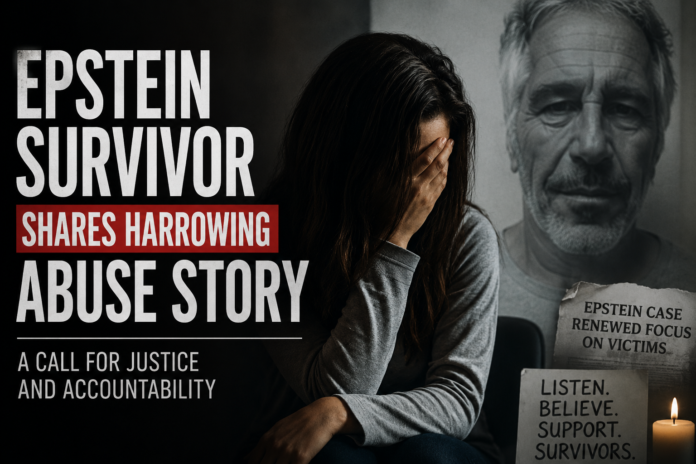
The story of a survivor speaking out about abuse linked to Jeffrey Epstein has once again brought global attention to one of the most disturbing criminal cases in recent history. As more victims continue to share their experiences, the focus has shifted toward accountability, systemic failures, and the long-term trauma faced by survivors.
The case of Jeffrey Epstein has remained in public discourse for years, not only because of the scale of allegations but also due to the powerful individuals connected to him and the failures that allowed his activities to continue for so long.
A Survivor’s Voice Breaks Through the Silence
In recent accounts shared publicly, an Epstein survivor described enduring manipulation, coercion, and psychological abuse that began when she was still very young. While details vary among individual testimonies, a common theme across survivor stories is the sense of entrapment and fear that prevented many from speaking out earlier.
Survivors often explain that the abuse was not only physical but also emotional and psychological, involving control, isolation, and threats that created a long-lasting impact on their mental health and personal lives.
For many, coming forward years later is not just about justice, but also about reclaiming control over their own narratives.
The Broader Epstein Case and Its Global Impact
The Epstein case has become one of the most widely discussed criminal scandals in modern history. Authorities in the United States and other countries investigated allegations that Epstein operated a long-running network of exploitation involving vulnerable individuals.
His arrest in 2019 and subsequent death in custody intensified public scrutiny, leading to widespread debate over how such activities went undetected or unpunished for so long.
The involvement of high-profile figures in Epstein’s social and professional circles has also fueled ongoing investigations and media coverage, although not all individuals linked to him have been accused of wrongdoing.
Why Survivor Testimonies Matter
Experts in trauma and criminal justice emphasize that survivor testimonies play a crucial role in understanding the full scope of abuse cases like Epstein’s. These accounts help:
- Highlight patterns of manipulation and exploitation
- Reveal institutional failures in oversight and accountability
- Support legal efforts to identify additional victims or accomplices
- Encourage other survivors to come forward
Psychologists note that speaking publicly can be both empowering and emotionally difficult for survivors, often reopening old wounds while also providing a sense of validation.
Legal and Institutional Scrutiny Continues
Even years after Epstein’s death, legal proceedings and civil lawsuits involving survivors continue in various jurisdictions. Institutions connected to Epstein have also faced lawsuits and settlements, as victims seek compensation and acknowledgment of harm.
Authorities continue to review evidence, including financial records, travel logs, and communications that may shed light on how the alleged network operated.
At the same time, advocacy groups are calling for stronger protections for minors and more rigorous enforcement of laws designed to prevent trafficking and exploitation.
The Long-Term Effects on Survivors
Survivors of abuse often experience long-term psychological and emotional challenges. These can include anxiety, depression, trust issues, and post-traumatic stress disorder (PTSD). Recovery is a long process that varies for each individual.
Many survivors emphasize that support systems—such as therapy, community groups, and legal advocacy—are essential for healing.
Importantly, public awareness of cases like Epstein’s has contributed to greater understanding of trauma and increased support for victim-centered approaches in the justice system.
A Call for Accountability and Reform
The continued emergence of survivor stories underscores the importance of accountability at every level—from individuals to institutions. Advocates argue that real change requires not only legal action but also cultural shifts in how abuse is recognized and addressed.
Key calls for reform include:
- Stronger child protection laws
- Improved reporting mechanisms for abuse
- Better oversight of powerful individuals and organizations
- Increased funding for survivor support services
Conclusion
The harrowing accounts shared by Epstein survivors serve as a powerful reminder of the importance of listening to victims and ensuring their voices are heard. While the legal process continues to unfold, the broader conversation has shifted toward prevention, justice, and healing.
As more survivors come forward, the world is forced to confront not only the crimes of the past but also the systems that allowed them to occur—and how to ensure they are never repeated.

