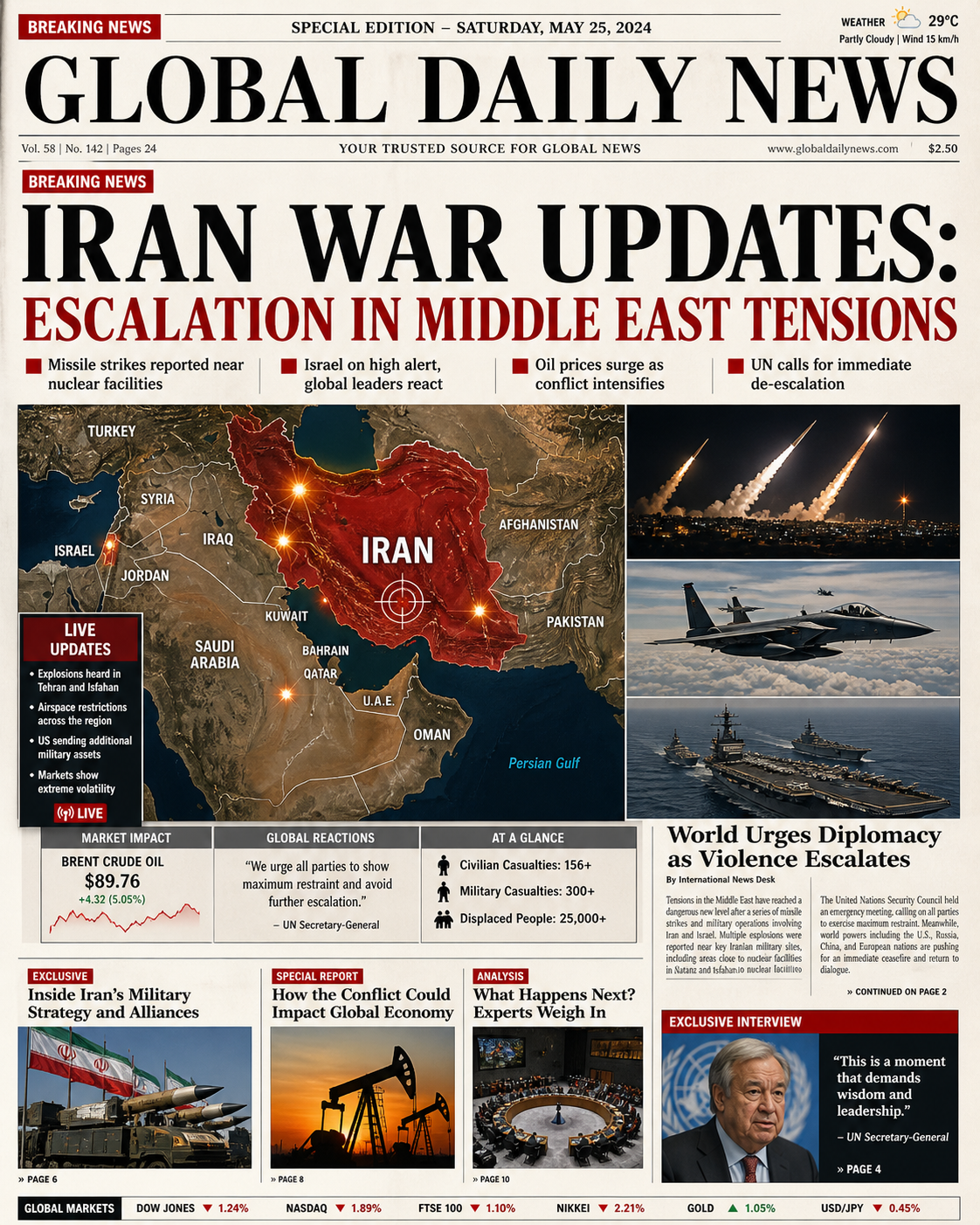
Tensions in the Middle East have escalated sharply following a series of confirmed Israeli military strikes on targets inside Iran. The latest developments mark one of the most serious phases in the ongoing regional conflict, which has already seen months of retaliation between the two countries.
According to multiple reports, Israel carried out coordinated air and missile strikes targeting Iranian military infrastructure, including sites linked to missile production, air defence systems, and facilities associated with the Islamic Revolutionary Guard Corps (IRGC). The Israeli Defence Forces (IDF) stated that the operations were based on intelligence identifying threats to Israeli security and were designed to “neutralise strategic capabilities” before they could be used in further attacks.
The strikes come amid a wider war environment that began earlier in 2026, when the United States and Israel launched joint operations against Iran following the collapse of diplomatic talks over Iran’s nuclear programme. Since then, both sides have exchanged repeated waves of missile and drone attacks, expanding the conflict beyond their borders and affecting neighbouring countries.
Iran has strongly condemned the latest Israeli actions, calling them violations of international law and promising retaliation. Iranian state media reported damage to several military installations but claimed that civilian infrastructure remained largely unaffected. Officials in Tehran have also reiterated that Iran will continue its defence operations and will not be forced into negotiations under military pressure.
In response, Israel has placed its northern and southern regions on heightened alert, with air defence systems such as Iron Dome and Arrow intercepting incoming threats. Emergency protocols have been activated in several cities amid fears of further Iranian missile launches or drone attacks.
International reactions have been mixed. Some Western governments have expressed concern over the rapid escalation and urged both sides to avoid further military confrontation. Meanwhile, diplomatic channels remain active behind the scenes, with regional powers attempting to mediate and prevent the conflict from spreading further across the Middle East.
The situation remains highly fluid, with no clear indication of de-escalation. Security analysts warn that continued strikes could lead to a broader regional war involving multiple actors, including allied groups and neighbouring states already affected by spillover violence.
As of now, both Israel and Iran continue to exchange threats and military actions, while the international community closely watches for any signs of ceasefire or renewed negotiations.

